

Still That Kid: Marly McFly and Active Imagination
Marly McFly didn’t set out to build a brand. He just needed a break.
Back when he was working an office job. One of those desk-bound routines that slowly grinds away at your imagination. Marly didn’t take smoke breaks like his coworkers. Instead, he picked up some colored pencils and zoned out into the pages of his sketchbook. “Leave me alone,” he’d joke. “I’m just coloring something.” What started as a way to survive the day eventually sparked a whole new chapter. That quiet rebellion, that decision to escape into his art, eventually became Active Imagination, a coloring book that invites adults back to the headspace they had before the world hardened them.
“I never said it, but people picked up on it. It was never for kids,” he admitted. “They already have that imagination. I wanted adults to use it. Just take that moment to escape.”

In Full Color: Black Women in Production
There’s a groove to being behind the scenes on a film set. A quiet influence. A type of presence that shapes the outcome without demanding the spotlight. And that’s where this story begins, not with the final cut, but with the women who make it possible. Who plans the shot. Who calls the wrap. Who keeps the set moving when no one else knows what comes next.
It’s easy to credit the face on the poster, but the vision? That’s often in the hands of the people off-camera. Nuri Muhammad, Anna Ray, and Chenita Adé are three Black women working behind the scenes in film across North Carolina. They’re producers. DPs. ADs. Writers. Storytellers. Problem solvers. And more often than not, they’re the glue.
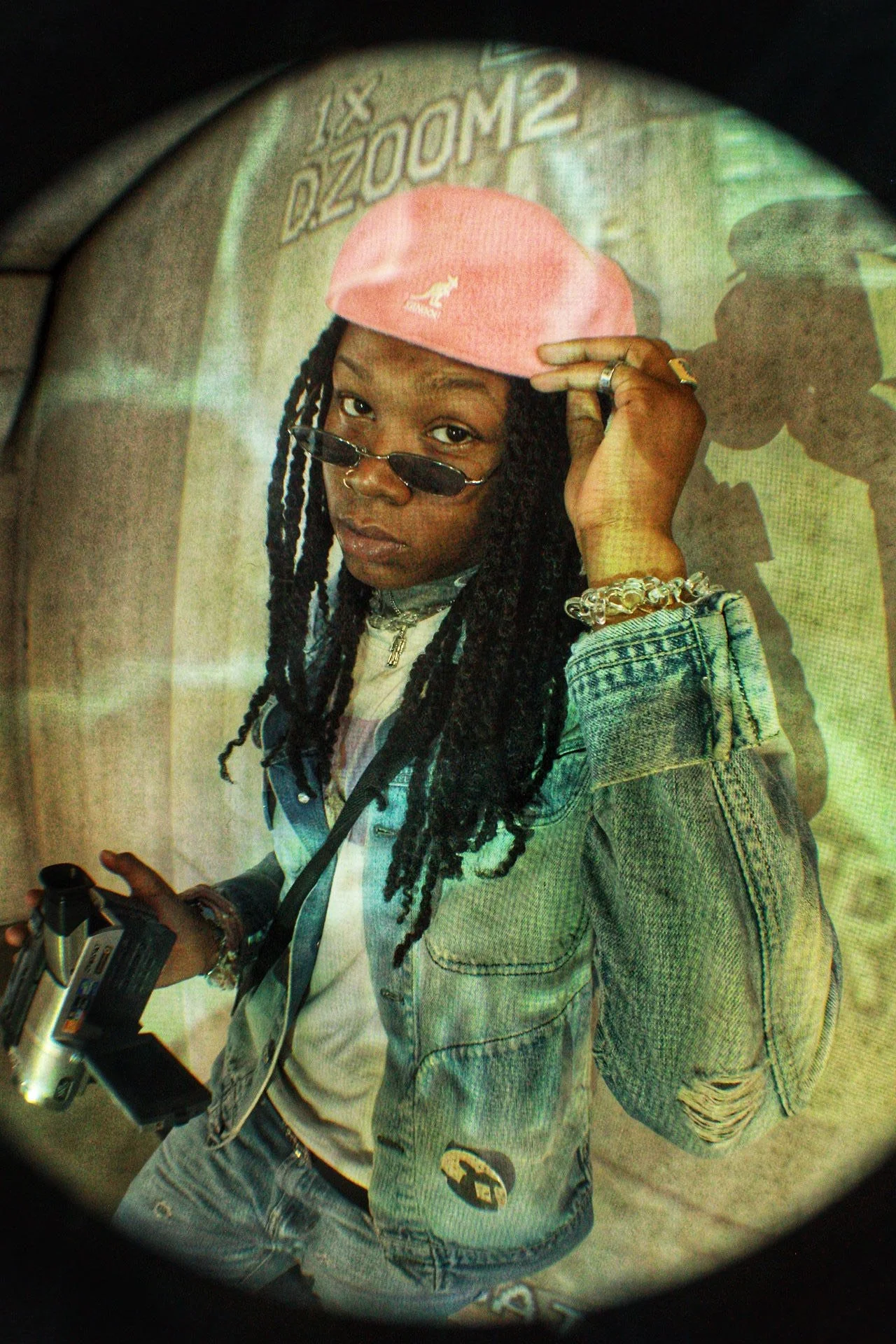
Get to Know Buku Love: Healing Through Sound and Story
Buku Love is making music and building a space where healing can happen. Blending hip hop, R&B, soul, and jazz, her sound invites listeners into a deeply personal experience that reveals who she is at her core. Each song is a chance to connect not only to her story but maybe even to your own.

Milton Gore on Art and Impact
Milton Gore sees art everywhere. In a face, in a fleeting moment, in a quiet expression. “I literally can look at someone and see an art piece,” he tells us. That kind of vision has shaped his work as a digital mixed-media artist and designer, and it’s what led him to build his own business, M.G. Visual Studios.

Deva Rani on Music and Meaning
When Deva Rani talks about music, there’s a spark. But what’s most captivating is her ability to articulate her creative process with honesty and warmth. “In terms of lyrics, I strive to be at Frank Ocean's level of lyricism. I typically use my own conversations with myself for inspiration,” she laughed. “My best lyrics have come from when I’m just sitting somewhere thinking about my situation, and the words just flow out of me.”
Deva Rani’s journey into music started at a tender age, four years old, to be exact. Her mother enrolled her in classical piano lessons, which, at the time, felt more like a chore than a passion. “I protested a lot,” she admitted with a smile. But as time passed, she started to appreciate the foundation it gave her. “I started noticing how fun it was to get really good at it. I treated it more like a sport.” That discipline and understanding of music became the foundation of her current production style. Even though classical piano wasn’t her first love, it laid the groundwork for her ability to improvise and experiment with different genres.
Her musical taste growing up was anything but one-dimensional. Thanks to her dad’s influence, she was exposed to everything from country and soul to funk. Her older sister introduced her to Alicia Keys, which she credits as a pivotal moment in her artistic journey. “Seeing someone who played the piano and wrote her own music was so inspiring to me,” Deva Rani recalled. “The culmination of all the different genres I was exposed to is something I carry with me every day, even if it’s really far in the back of my mind.”

Designing a New Americana with Arius Juan
When Jujuan Lewis talks about fashion, you get the sense he’s building something bigger than just clothes. He’s building a legacy. That legacy is Arius Juan, a luxury fashion house rooted in Americana aesthetics and shaped by Jujuan’s memories of school uniforms, the hand-me-downs, the creative spark he carried for his brother, and the deep desire to design the things he never had growing up.
“I didn’t think I was creative,” Jujuan said. “I was the numbers guy. I studied finance. But during the pandemic, everything shut down, and suddenly I had time. Time to see what creativity could look like for me.”
Arius Juan began as a shared vision. Jujuan had hoped to launch the brand with his brother, whose creativity had been stifled by personal challenges. “I wanted to keep him creative,” he explained. “But when he couldn’t be part of it, I had to decide. Do I stop or carry this on? I chose to carry it.”